
Part 2 - Collaboration and Networking - Across Heritage Agreements.
c

Eremophilla's verison of Michelangelos creation of Adam
Part II – Networking and Neighbours.
Collaboration across Heritage Agreements.
The Murraylands conservation areas and rural properties are all connected, whether physically or through the movement of people, winds, rain and animals.
Whether you're farming, looking after native vegetation, interested in conservation, or enjoying a lifestyle block, how we manage our land effects our neighbours, and vice versa. In addition, how we manage our land can significantly impact the future of our grandchildren, our natural resources and economy.
This post follows on from a previous one on the role of conservation-minded volunteers and Networking with neighbours in land management (see Post – Volunteering and Networking) by the Environmental Volunteers, where we shared the support fellow and precedes one on our property management planning process.
A simple way of thinking of this is that feral pests and weeds don’t stop at fences. That’s why working together with neighbouring landholders is one of the most effective ways to protect our land, animals, and environment into the future.
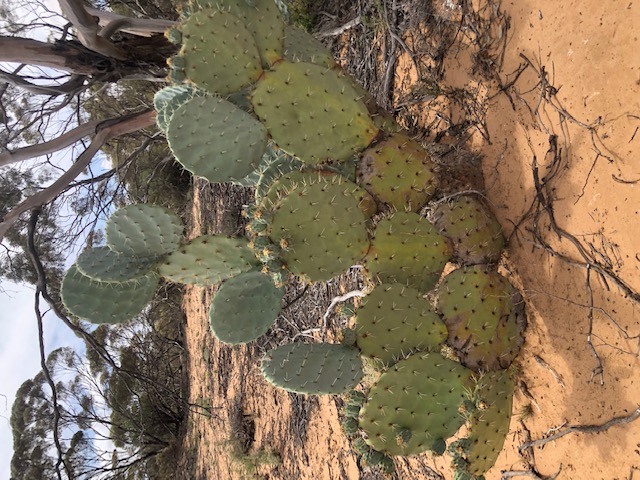
Wheel Cactus on 16:6
In our region, common feral pests, including foxes and feral cats, prey upon native species. In some areas, goats and rabbits are damaging the vegetation and competing with our native herbivores. Add to this invasive weed species, such as horehound, onion weed, Paterson's curse, and National Weeds of Significance (WoNs), African boxthorn and wheel cactus, can spread rapidly, challenging and reducing native species density and increasing fire risk.
As a land holder, we believe that we can do everything right 'on our land’, however, if the property next door is full of weeds or the landowners don't manage feral pests, then it won’t be long before our hard work is undone.
Pest animals and weed seeds easily cross property lines by hoof, paw, wind, water, and wildlife. In addition, native abundant species move freely between properties, which can lead to over-grazing, displacement and an imbalance.
In our efforts to engage and educate people over the past few years, we have had many casual conversations with neighbours and discussed the reasoning behind land management decisions, focusing on the values of a collaborative approach to manage threats; introduced weeds, feral pests and even discussions relating to our abundant natives. It is obvious that coordinating with neighbours is more effective and efficient.
The benefits of working together include
1. Better results: A joint effort covers more ground and reduces the chance of pests or weeds coming back.
2. Save time and money: Share tools, labour, and costs.
3. Stronger community ties: Build trust and cooperation with neighbours.
4. Access to grants: Many government programs prefer or require group projects.
5. Local knowledge: Learn from each other’s experiences and what works in our part of the Murraylands.
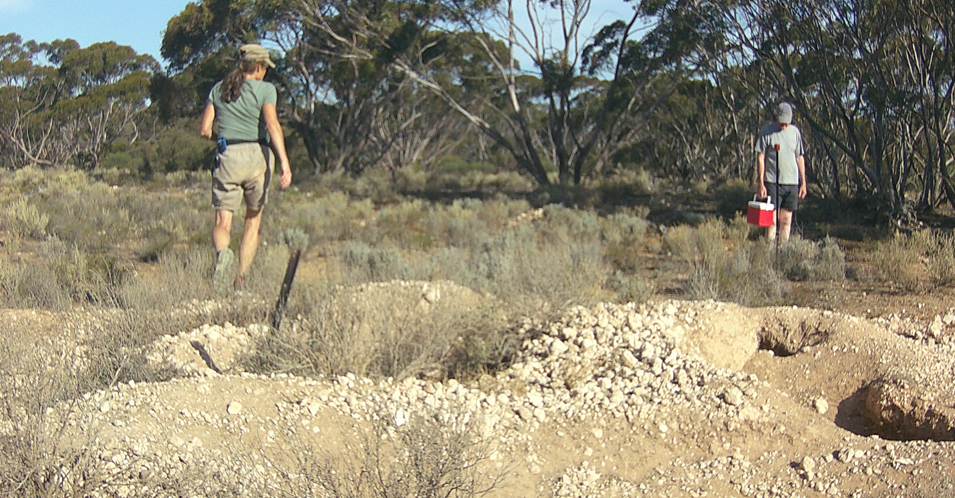
Collaboration in feral animal control - laying fox baits on a Wombat Warren
OUR EXPERIENCE
If we were asked how to start the process of collaborating with neighbours, we would share our experience and learning over the past three years.
1 - We got to know our neighbours, had coffee/red wine catchups, and attended local events to meet and greet. We not only met some fabulous people but also realised that many of them were knowledgeable and well ahead of us in the fight against invasive species.
2 - Then, armed with contacts, their encouragement and ideas, we made plans.
3 - A property management plan is a roadmap for the responsible management and stewardship of protected lands, ensuring their survival for future generations. This can be a complex and dynamic process; however, the step-by-step version is.
- Clearly define the conservation values of the land. In our case, we considered the environmental, historical, and cultural significance, and the existing information around how, when, where, and why the different sections were placed under Heritage Agreement Protection. To do this, we sought advice from neighbours, NGO, Government Agencies, and experts.
- Identify the main species or association needing attention, i.e the key listed (Scheduled Rare, Vulnerable and Endangered)

The Scheduled Mallee Fowl - 16:6
Our experience and the property management side - identifying needs.
- Identify the main problems, for example, ours were goats, cats and foxes, a range of Weeds of National significance (WoNS), past poor land management practice, illegal dumping and firewood collection, as well as native species overabundance impacts.
- Prioritise the most significant threats, what season to address them, policies and legislation that guide these decisions and when and how to address them.
- Identify the agencies, community groups and funding bases that could assist with aspects of the plan and delivery.
- While a plan needs to outline specific actions and strategies to address identified threats, it also needs to ensure the long-term preservation of the property. This includes forward thinking, i.e. addressing the ongoing maintenance, monitoring, and review processes to ensure the plan remains relevant and practical over time.
- Once we had a property management plan in place, we shared this with some neighbouring landholders’ friends, as we felt that our priorities would align with theirs and would be more effective if we could collaborate so that any action could be simultaneous, forming a wider landscape delivery.
We have had some interesting and mixed responses from neighbours.
Weed control – Neighbouring landowners understood the value of wider area weed management and the benefit of supporting this by providing access and approval. Everyone we have shared with agrees that weeds are an issue that requires addressing. Most cited that they would be unlikely to deliver the control work due to age, infirmity or other commitments; however, they would appreciate it if funding were available, and to work with boards or the community to address these issues. (See previous post on Weed Management)
Feral Animal Control - Most of our discussions were supportive towards the Fox and Cat control priorities, reporting, mapping (feral scan), and understanding the devastating effects/impact on species conservation. We have been working together with several neighbours to collaborate on fox baiting and some cat trapping. (See Previous post on Fox baiting)
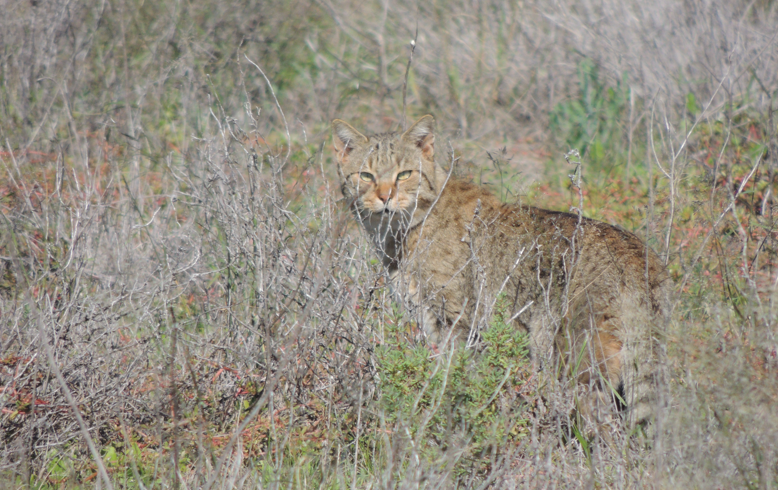
Feral Cat ( Image D Armstrong - our in house Catsxpert)
Goat control is one of the issues that we have discussed. Generally, we have found an agreement that this issue needs to be addressed as a priority; however, there are some complex social implications to consider before a broader (Ie Landscape Board) program is delivered.
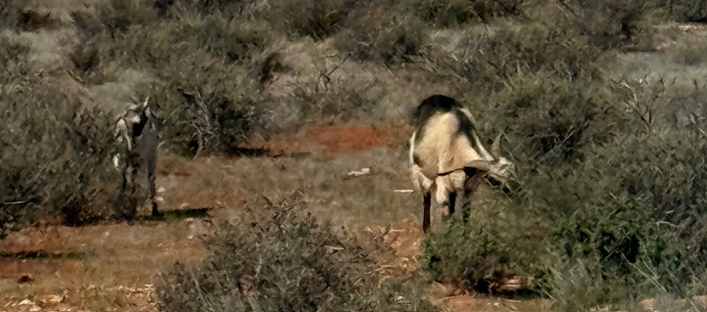
Feral Goats roadside
Sustainability of overabundant natives. Kangaroo and wombat overgrazing/browsing is a concern!.
Wombat digging and browsing impacts have been worrying over the last 12 - 18 months due to an extremely hot, dry year, resulting in several animals in poor condition, significant soil disturbance, erosion and associated weed spread. Wombats are not recorded on most of our neighbouring properties.
Wombat control is not being considered on 16:6 as these species need to be protected, not culled. It is a situational concern caused by wider poor seasonal conditions and limited food supply. The grazing pressures of the local Kangaroos exacerbate this situation.
Kangaroo management (humane control and culling) is something that we have captured in our management outcomes and are monitoring for future action. We are maintaining records using photo points, scat density assessment, exclusion zone vegetation recruitment, population observations, and the use of remote cameras. The impacts that Kangaroos are having on the existing vegetation and regeneration/ recruitment are notable, with our concern being evidence that such populations may lead to the decline of some of our threatened -scheduled species ( i.e. Mallee Fowl and Bardick) (See previous post on Kangaroo Management)
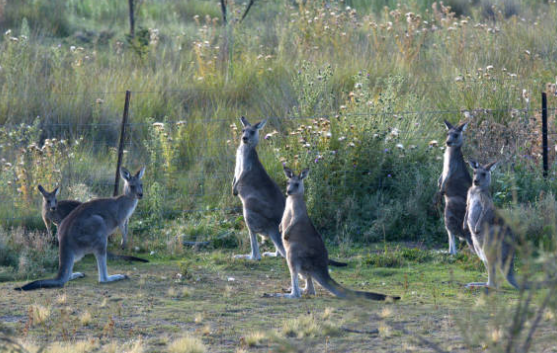
An example from the web of the grazing pressures by high kangaroo number Vs an area with few Kangaroos. Note this is not in our region.
In discussion with neighbours, we have had mixed responses on the control of Kangaroos, with several neighbours actively maintaining water sources encouraging kangaroos and feeling that a culling program is not for them.
Others have indicated that they may support a wider area cull; however, they would like details on what this would involve.
So when we speak of Collaboration, we are talking more than working with neighbours and other nearby properties. We believe that it is essential that groups like the Mid-Murray Landcare, Landscape SA Murraylands and Riverland are approached to provide advice. These groups also offer information sessions, training, and loan equipment.
Real Success Stories of collaboration in our area.
Local landholders near Tailem Bend and Mannum have teamed up on rabbit control, reducing numbers across whole districts. See link
Landcare groups have led blackberry removal programs that restored riverbanks near Murray Bridge. See Link
Farmers around Lameroo and Karoonda have seen success by joining forces to reduce feral pig and fox numbers. See link
From these success stories, stakeholders across various sectors and organisations expressed strong support for a collaborative approach to land management. There's a consensus on the need for partnerships that span different tenures and organisational boundaries.
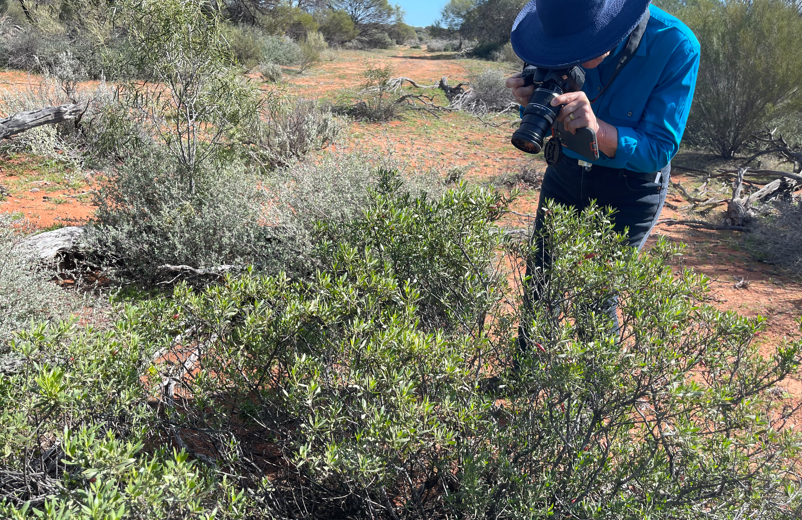
Collecting images and sharing data
Neighbourhood Ninkenpoops.
Our neighbours are luddite’s and conspiracy theorists? Not at all! While our neighbouring property owners may hold different views from us, they are, as a collective, fabulous folk with conservation at the heart of their decisions. But bear in mind that there will always be real challenges in working with others. Neighbours might have different priorities or less time, equipment or direction. However, being respectful and focusing on shared goals can go a long way.
Other considerations that we have learnt from our collaboration to date include:
- Keep records and check progress along the way. You can never keep too many records.
- Track what you’ve done and what’s working across the landscape. Adjust your plans if needed
- Local facilitators such as Landcare and members of the Murraylands and Riverland Landscape Board can also help get people on the same page and work collaboratively, especially with wider regional priorities, and even grant-funded programs.
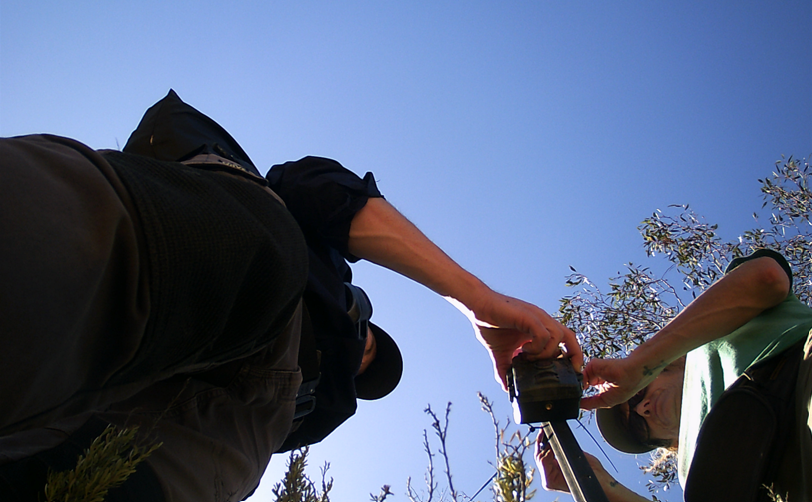
The inveterbrates view of humans - Setting up cameras on a boundary fence re feral goat movement
By working together, we can make a real impact—not just for our properties, but for the whole community and future generations.
Strong communities lead to stronger land management—and that’s good for everyone.
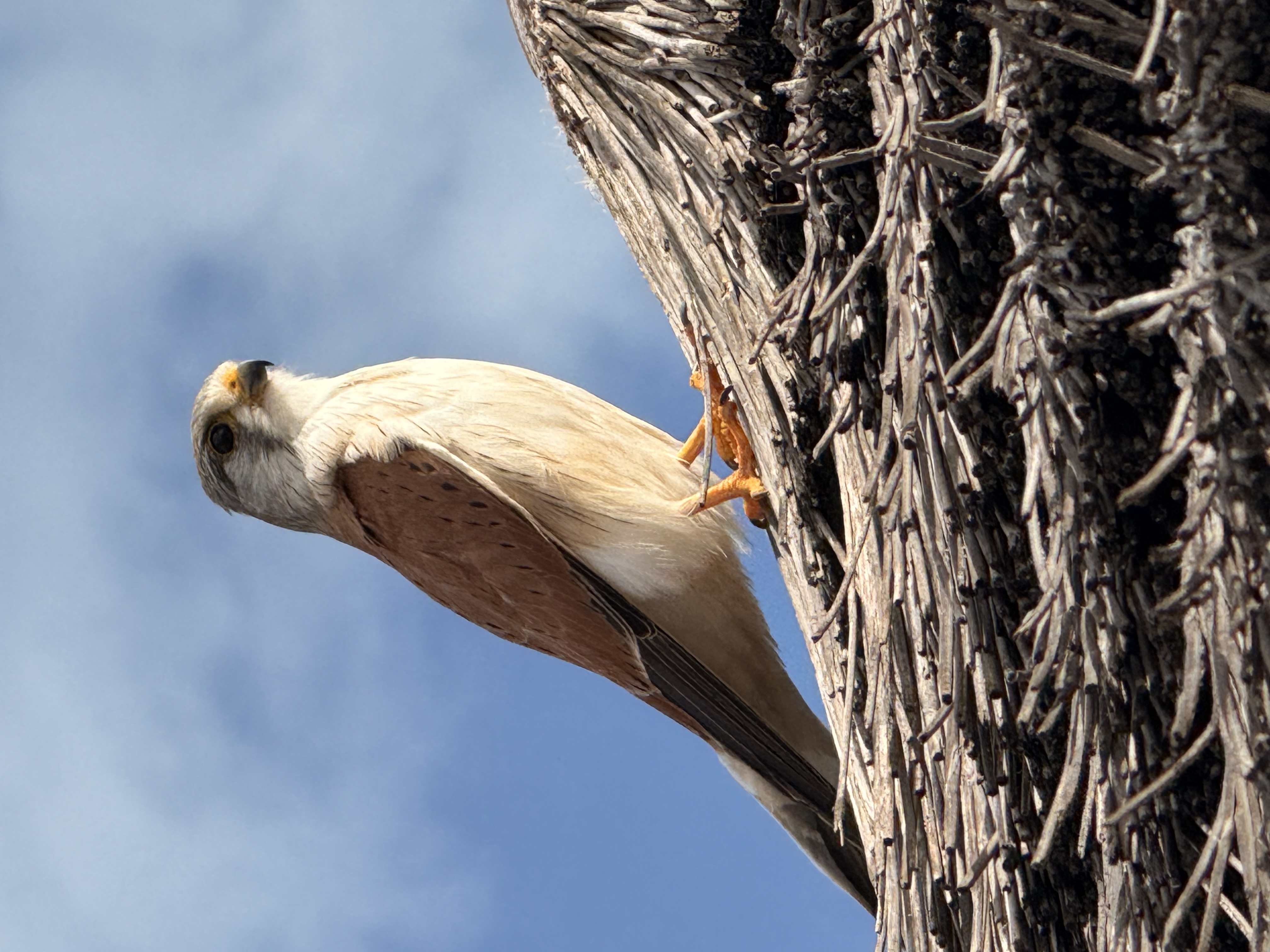
Nakeen Kestral 2025- Talk about a natural symbol of strength !