Fox Control - A Landscape Program for the Mid-Murray Region 2026 - 2027
Fox Control Funding Update – 2026 Program
This post documents the background and intent behind our application (submitted December 2025) for grant funding to support a coordinated, landscape-scale red fox control program across the 16:6 region, which we started in late 2023. This post follows on from an earlier blog we posted in September 2024 – see link.
This summary preserves continuity with earlier proposals and outlines both the need for improved techniques and the recommended approach for 2026–2027.
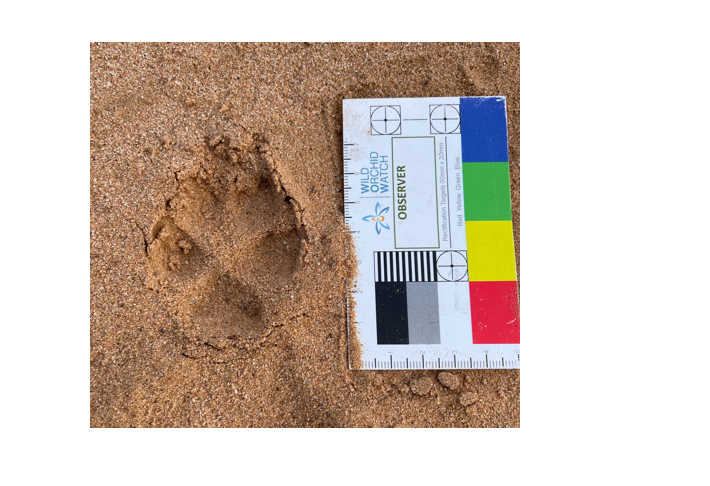
A fox footprint in a sandy area on one of the access roads towards the Swan Reach Conservation Park
Background: Why Fox Numbers Are Increasing
Introduced European red foxes continue to increase across the region due to:
- high food availability (Rabbits along the Marne River area, notable kangaroo numbers killed on roadways, Goats shot and left to lie, high lizard, rodent and invertebrate numbers)
- limited or fragmented control efforts, and
- limited uptake of new tools.
To address the growing impacts on native species and ground-nesting fauna, the 16:6 Heritage Trust has applied for funding to expand efforts beyond standard seasonal baiting.
Current Control Methods & Their Limitations
1. Shooting
- Useful for problem individuals.
- Requires experienced, licensed shooters.
- Labour-intensive and limited as a landscape-scale tool.
2. Trapping
- Cage traps are most effective in urban or semi-urban settings.
- Requires regular checks.
- Low catch rates in open and remote areas.
3. Den Fumigation / Den Destruction
- Effective only when dens are known.
- Time-intensive and seasonal.
4. Ground Baiting (1080 )
Baiting remains the primary large-scale tool, particularly:
- late winter–spring (when population is lowest and food demand is highest),
- and autumn (though reinvasion occurs quickly).
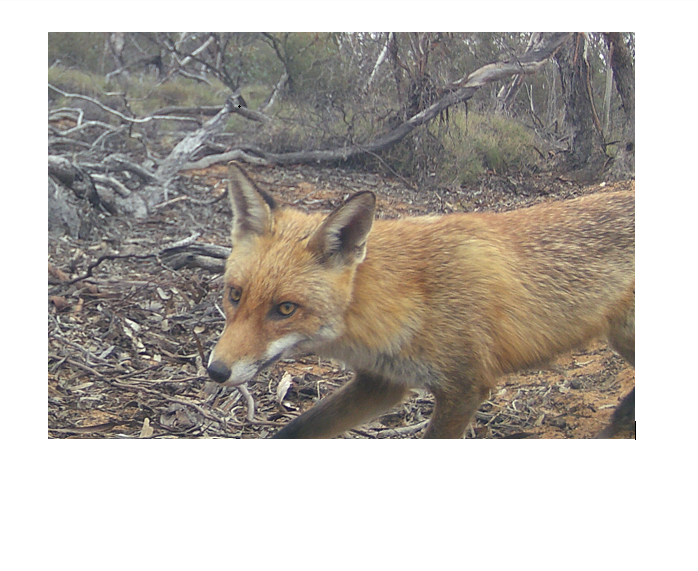
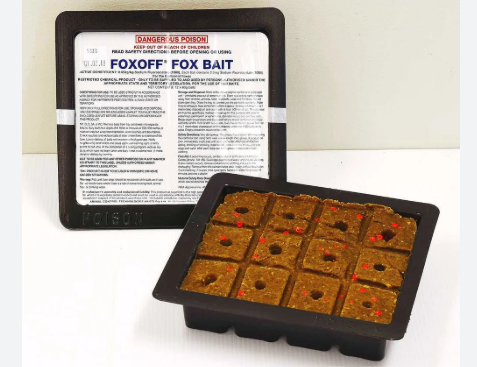
We have conducted annual baiting since 2022, using xxxx and FOXOFF® baits provided by the Landscape Board, buried along tracks and fence lines and logged using GPS.
Challenges Identified with Traditional Baiting
Image of a traditional bait
We started our baiting program in the spring of 2022 as a low-key exercise, as we were not in the area frequently enough to manage a continuous program. However, in 2023, after images from trail cameras showed that foxes were common visitors to an active Mallee Fowl Mound on Parcel 226, 100 Ridley, which we were observing, we decided, with some assistance from a neighbour, to ramp up the program.
In addition to predation by Mallee Fowl, a mother brush-tailed possum and her young were captured visiting the mound quite frequently; this species is listed as rare in the region and is highly susceptible to fox predation.

Images of a juvenile Brush Tail Possum on a Large Mallee Fowl Mound - 2025.
This baiting program was done by using the traditional meat baits, which we buried by digging a hole about 10 cm deep in a strategic location, like a fence line or track, placing the bait inside (one per hole), and covering it with soil.
After placing each bait, we marked the site with flagging tape or another identifier and recorded the GPS location to allow accurate follow-up checks. However, several practical problems became evident during our three years of baiting:
1. Ant Predation
In many locations, primarily sandy or nutrient-poor areas, baits were rapidly consumed or damaged by ants. This occurred within hours in some places, significantly reducing bait availability to foxes.
2. Weather-Related Breakdown
Baits often needed to be replaced immediately after rain or even heavy dew.
This is because 1080 (sodium fluoroacetate) is highly water-soluble. Moisture causes the poison to leach into the surrounding soil, where microbes (bacteria and fungi) quickly break it down into harmless by-products. While this is environmentally safe, it means that:
· bait potency can drop dramatically within a single wet night,
· Sandy soils accelerate the leaching process, and
· We could not reliably guarantee bait efficacy after weather events.
Given the labour required to bury baits—often across large, remote areas—this rapid loss of effectiveness (sometimes within 12–24 hours after laying baits) made traditional baiting both inefficient and unreliable in certain parts of the 16:6 region.
Concerns with traditional baits include
1. Rapid Bait Breakdown
Harsh conditions reduce bait longevity and toxin stability, shortening effective windows.
2. Caching Behaviour
Foxes often cache baits, reducing availability and increasing:
- non-target risk,
- uncertainty in bait location, and
- wasted effort in replacement.
3. Sub-lethal Doses & Bait Aversion
Breakdown or caching can lead to foxes consuming weakened baits, resulting in:
- illness but not death,
- learned aversion to toxins, and
- reduced program efficiency.
4. End-of-Program Cleanup Requirements
Uneaten baits must be removed to:
- prevent aversion,
- protect non-target species, and
- meet compliance requirements.
A Better Option: Canid Pest Ejectors (CPEs)
Canid Pest Ejectors (CPEs) are spring-activated devices developed initially in the 1930s (U.S.) for canid control. Modern versions deliver a measured 1080 dose directly into the animal’s mouth when the lure head is firmly pulled upward.
Key Advantages
- High target specificity
Trigger force and lure types favour foxes and wild dogs over non-target species. - Low attraction to herbivores and birds
Studies show that birds and reptiles rarely trigger the device. Our remote cameras show wombats scratching the CPE, Currawongs pecking it, and a kangaroo playing with it. None have ever been triggered by any animal other than a fox that we are aware of. - Secure installation
Staked to the ground and connected to a wire and a tent peg; it cannot be removed or cached. - Long-term deployment
Devices can remain in place for extended periods (subject to regulations). We can leave from 8-10 weeks vs our buried fresh baits, which need to be checked and replaced weekly in this climate - Consistent dose & no bait degradation
Prevents sub-lethal poisoning and aversion. - Reduced labour
Requires periodic refresh (not daily checks).
CPEs address all significant limitations of traditional baiting and provide a stable framework for long-term fox suppression.
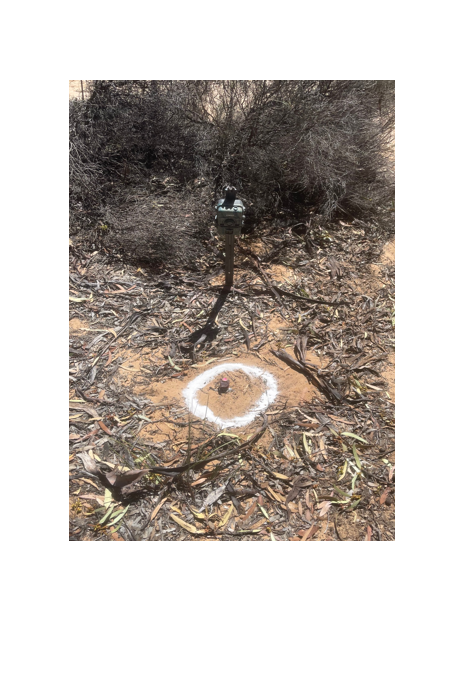
A CPE in an area with meat ants ( Ant-sand ring). This CPE is under remote camera surveillance.
Monitoring & Site Management
Monitoring bait stations—whether traditional buried baits or Canid Pest Ejectors (CPEs)—is essential to the success of this landscape-wide program.
Site Selection & Transect Design
To ensure consistency and reliable monitoring, the program will establish a mapped transect network along boundary fences, dissecting tracks and roads, vehicle tracks, and established animal pads. CPEs will be installed at pre-determined points along these transects, selected based on:
- presence of fresh fox tracks,
- use of existing wildlife movement corridors (kangaroo pads, shared tracks),
- proximity to high-value or vulnerable sites such as Malleefowl mounds,
- existing remote camera evidence of fox activity.

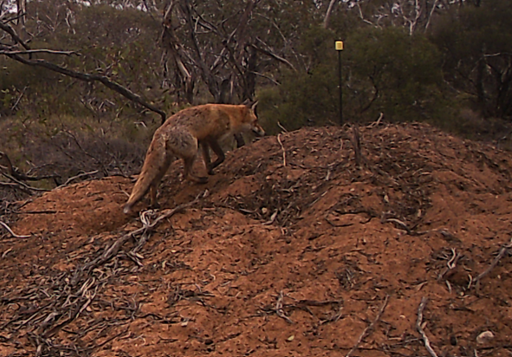
A pair of foxes on a larger active Mallee Fowl Nest
Camera data gathered over recent years confirms foxes preferentially follow known pads and tracks, making these ideal locations for consistent monitoring.
This mapped transect system ensures that:
- We always know the precise location of every CPE,
- monitoring can be undertaken safely and systematically by driving or walking set routes,
- Signage regarding poison use can be placed and maintained in predictable locations.

Placement Requirements & Flexibility
All CPEs will adhere to the required placement rules:
- No CPE will be within 500 m of a dwelling.
- No baiting will occur near neighbouring properties that are not participating.
- No two CPEs will be closer than 500 m to one another.
The transect design will allow flexibility in relocating any CPE if:
- Trail cameras do not detect fox movement,
- no tracks, scats or evidence of visitation are present,
- landholder access requirements change.
When relocation is required, the unit will be moved to a new suitable site along the same transect, preserving monitoring integrity.
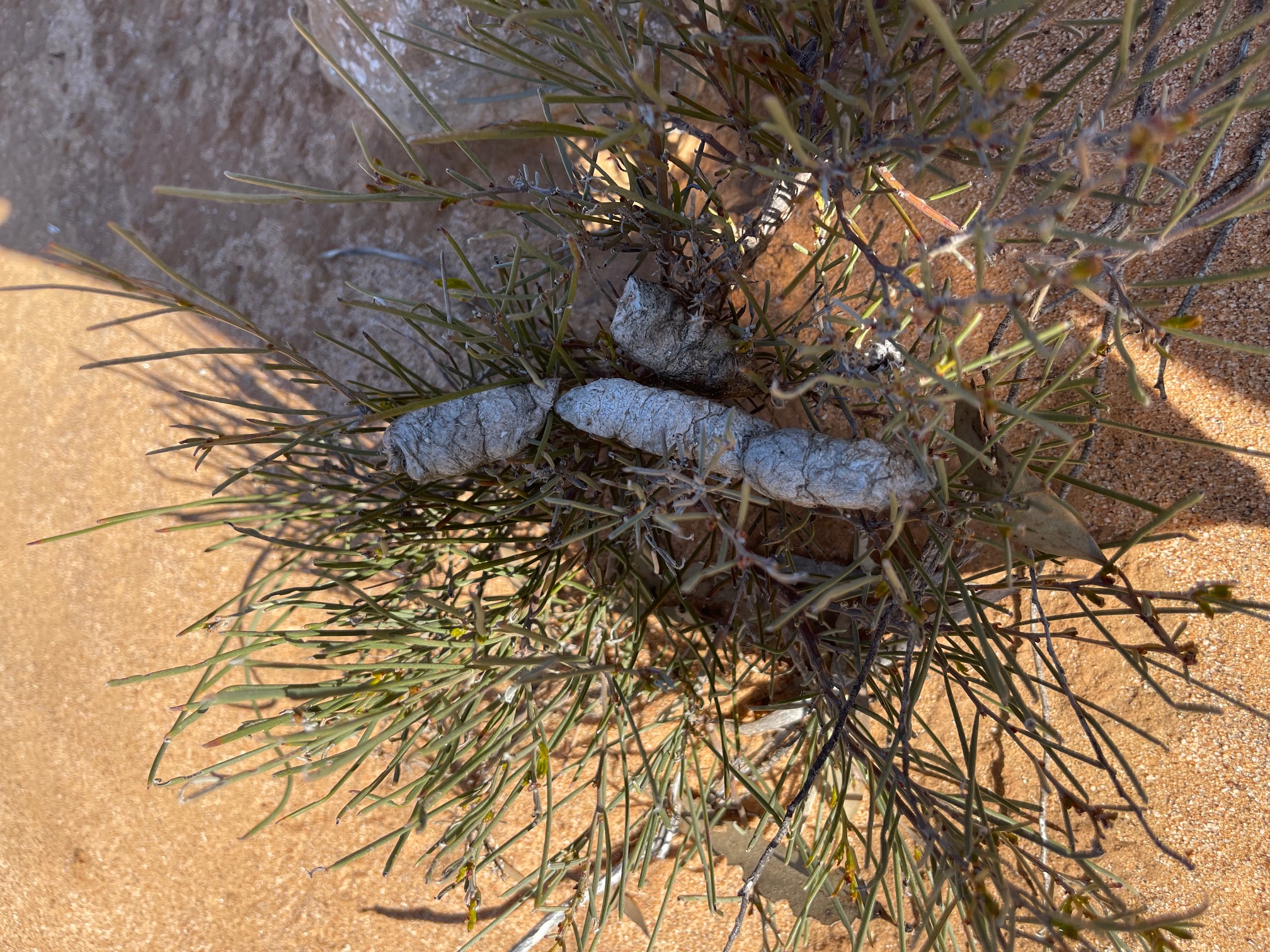
Fox scat elevated on a small spinafex bush - marking its trail or area
Monitoring Schedule & Data Collection
All CPEs will be checked fortnightly to monthly. During each visit, the following will be recorded:
- any bait taken or triggered,
- condition of the CPE unit and lure head,
- fox activity signs (tracks, scats),
- camera images or video of fox interactions.
This data will be entered into an Excel spreadsheet designed for biannual reporting.
Remote wildlife cameras will be rotated among CPE sites to capture the highest possible amount of activity data.
Use of FeralScan
All sightings, control actions, and evidence of fox activity will also be uploaded to FeralScan, a community-designed website and smartphone app for recording pest animals and impacts.
FeralScan is:
- free,
- easy to use, and
- widely adopted by community and government programs.
Using FeralScan ensures that the program contributes to regional and national data while maintaining transparency in control actions.
Link to feral scan

Three screens from Fox Scan - Feral Scan entry
2 -The screen to add sightings, and 3 -our sighting reports captured on a state map
GPS Mapping & Reporting
Each CPE location will be assigned a GPS reference, which will be uploaded into NatureMaps to produce:
- an annual map of all active and historical CPE sites, and
- a spatial layer that can be provided to the Landscape Board along with spreadsheet records of bait uptake and fox observations.
These layers form part of the program’s required reporting and allow long-term tracking of spatial control patterns.
2026–2027 Fox Control Proposal

Two foxes, Spring 2025, on a smaller active Mallee Fowl mound
The planned 2026 -2027 Fox Baiting program
This program aims to deliver a wider landscape approach to the laying of baits (CPE), monitoring, and management across multiple land holdings.
- 20 CPE units installed across 15 properties (with landholder agreement).
- Managed by 16:6 Heritage Trust volunteers, including trained university students.
- Refresh CPEs every 4–6 weeks, with seasonal adjustment.
- Monitoring at 50% of sites using Trust-supplied remote cameras.
- Data sharing with:
- Landscape Board
- DEW Biological Survey Team
- FeralScan
- Biannual reporting in spreadsheet format.
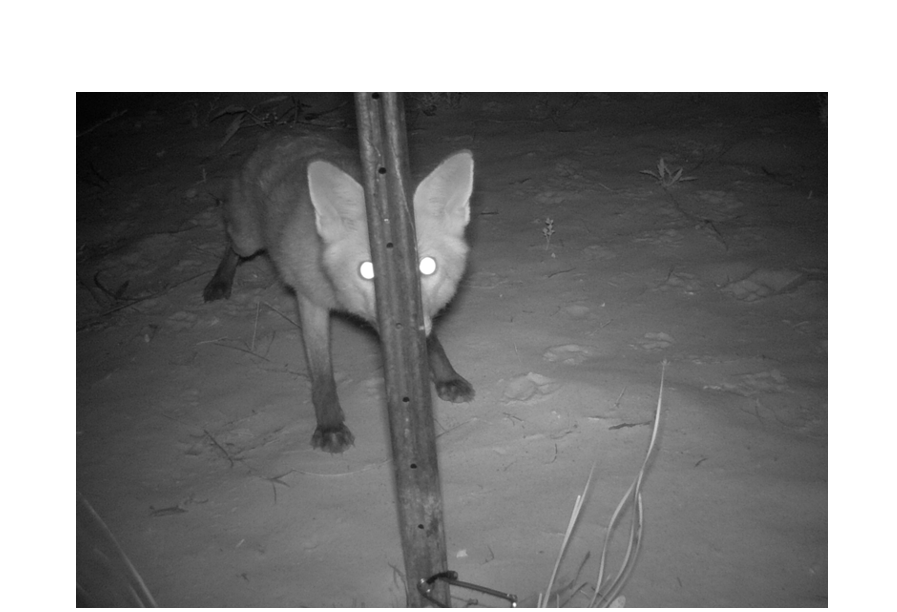
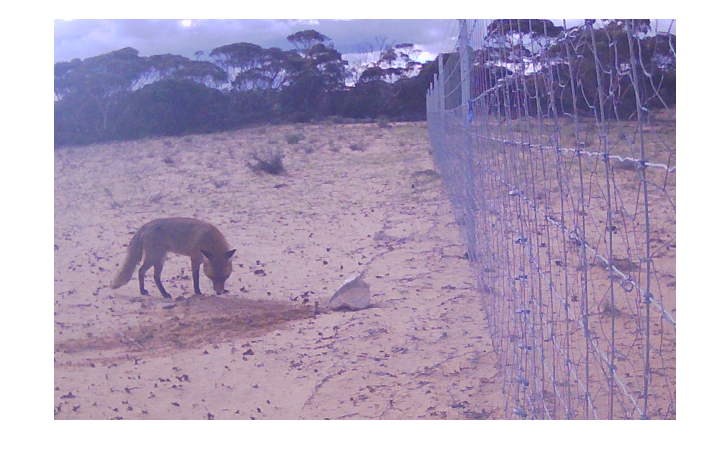
A fox approaching a CPE bait - December 2024 - open sand area
Estimated Costs (Funded by the Landscape Board)
|
Item |
Units |
Unit Cost |
Total |
|
CPE Injectors |
20 |
$80 |
$1,600 |
|
Bait Heads |
200 |
$0.50 |
$1,000 |
|
1080 Capsules (150) |
– |
$112 |
$186 |
|
Total (Year 1) |
$2,786 |
||
|
Total (Year 2) (bait & toxin only) |
$1,186 |
In-Kind Contribution – 16:6 Heritage Trust
|
Our Contribution |
Estimate |
Annual Value |
|
On-ground fox control (2 people, 2 days/month – 336 hrs/yr) |
$50/hr |
$16,800/yr |
|
Data processing & reporting (36–72 hrs/yr) |
$50/hr |
$1,800–$3,600/yr |
|
Provision of 10 remote cameras By 16:6 |
– |
Included |
These in-kind contributions significantly leverage the value of the grant and demonstrate long-term commitment to landscape-scale fox reduction.
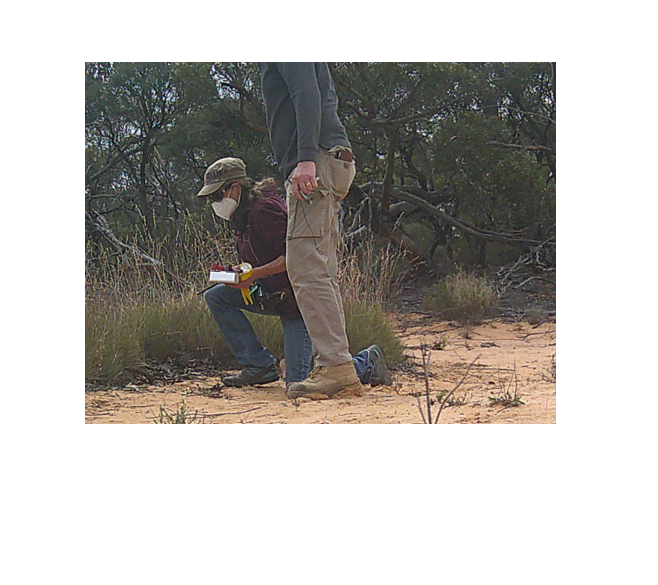
Checking a CPE tie-down after a fox stole one from a sandy substrate. Note CPEs are only set when we are wearing full PPE, mask, Glasses and gloves due to the toxicity of the 1080 product.
Below is a nighttime infrared image of a Fox taking a CPE

Essential Considerations Before Program Implementation
-
Engage with Landscape Board staff.
Liaise with experienced Landscape Board personnel to seek input, advice, and guidance on program design and operational processes. -
Confirm suitable monitoring and operational sites.
Identify and validate appropriate sites. Develop clearly defined access tracks, record GPS coordinates, and maintain a centralised spreadsheet for accurate record management. -
Secure remote camera resources.
Purchase or allocate the required number of remote cameras to support program monitoring and data collection. -
Obtain landholder approvals
Ensure all participating properties complete and sign the required documentation granting access permissions and approving the use of 1080 bait on their land. -
Install mandatory signage
Display appropriate warning and information signage at all property entry points, along public roads bordering the property, and at any shared access points, in accordance with regulatory requirements.
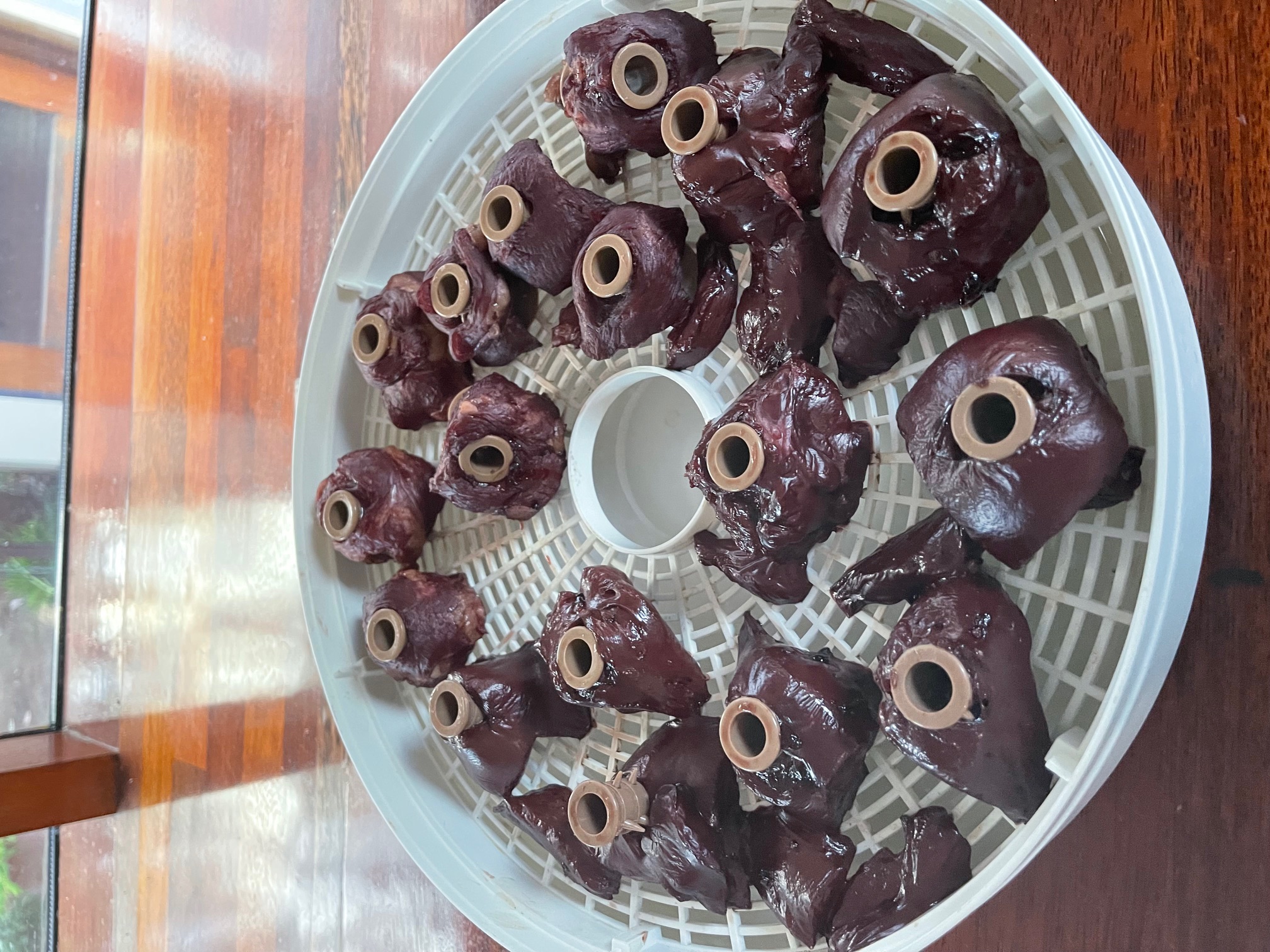
Drying meats for the bait heads 2025 - trying different meats. (This one is liver, which was not a good base as it broke down rapidly when exposed to daily heat )
Summary of What We Are Trying to Conclude
The 16:6 Heritage Trust’s 2026–2027 fox control proposal concludes that traditional fox control methods are no longer sufficient to manage rising red fox numbers across the region, and that a coordinated, landscape-scale program using Canid Pest Ejectors (CPEs) is the most effective, reliable, and sustainable solution.
Despite three years of seasonal baiting and other control techniques, fox populations remain high due to abundant food sources, limited control coverage, rapid breakdown of buried baits, and the behavioural limitations of foxes (such as caching and bait aversion). These factors reduce the reliability and efficiency of current methods.
The program argues that CPEs overcome all major problems with traditional baiting by providing:
-
High target specificity and low non-target risk
-
Consistent dose delivery with no weather-related degradation
-
Long-term deployment with far less labour
-
Secure, non-cacheable installations
-
Better integration with monitoring through mapped transects and remote cameras
By installing 20 CPEs across 15 cooperating properties, supported by systematic mapping, GPS tracking, camera monitoring, and reporting via FeralScan and NatureMaps, the Trust aims to implement a robust, evidence-based, region-wide fox suppression program.
The conclusion of the work is that CPE-based, landscape-scale fox control is the necessary next step: it is more effective, more scalable, more measurable, and better aligned with regional conservation goals—particularly the protection of vulnerable species such as Malleefowl and Brush-tailed Possums.
The combination of Landscape Board funding and substantial in-kind contributions from the 16:6 Heritage Trust demonstrates the feasibility and long-term commitment needed to deliver lasting reductions in fox numbers and improved outcomes for native wildlife.
We plan to provide an update as the program progresses, so watch for the next Post on Fox Management.